Thursday, 30 October 2008

The Omen (1976)

"When the Jews return to Zion, and a comet rips the sky, and the Holy Roman Empire rises, then you and I must die. From the eternal sea He rises, turning armies against either shore, turning Man against his brother. Till Man exists no more."   

Complete poppycock, in point of fact, but with a hint of the Book of Revelation about it, and delivered in such a way to make it feel compelling and chillingly predictive. The one actual quote from the Bible does appear at the end of the film:

"Here is Wisdom. Let him that hath understanding count the number of the beast: for it is the number of a man; and his number is 666."

The theme of the three sixes forms the basis for David Seltzer's slightly overrated but highly commercial script, which thanks to the careful direction of Richard Donner made The Omen a compelling premise for the rise of the Antichrist in the late 20th century, and a big hit for a 1970's American audiences still trying to come to terms with a society crumbling and the Vietnam war being lost, and needing some sort of spiritual solace or affirmation in a similar vein to The Exorcist.

Opening apocalyptically enough, on the 6th June at 6am, we see the dignified figure of Gregory Peck, no less, as American diplomat Robert Thorn (changed from "Jeremy" Thorn because of the similarity to the controversial British MP Jeremy Thorpe) urgently on his way to a Rome hospital where his wife Kathy (Lee Remick) is in labour, but the news - dare one say the omens - are not good. A mysterious priest (Martin Benson) reveals in voiceover that their baby son died soon after leaving the womb. But deliverance is at hand. For fear that the loss of another baby (there'd been an earlier miscarriage) would destroy Kathy, Thorn apprehensively agrees to secretly take on another little sprog as substitute, that happened be born the same time as the Thorns' beloved, with "its mother" dying in childbirth.

"On this night Mr. Thorn, God has given you a son.", the priest declares, and so Thorn walks in with little Damien in his arms to the delight of the innocently unaware Mrs. Thorn, who is told that this is her child. Little though Thorn realises it, he has made a fateful decision which will herald the beginning of the apocalypse....

...though there's little sign of it at this early stage in proceedings. Interestingly, Donner's approach was to treat the story as a gradual mental deterioration of the principal characters rather than as a definite charting of the rise of the Antichrist. It is this straightforwardness, combined with suspenseful elements of the potentially supernatural that make The Omen so effective. The truth of the matter is never in doubt as far as the audience is concerned however, thanks to the ominous opening credits and Jerry Goldsmith's screechingly Gothic theme music.

But indeed, for the next reel or two, all seems to proceed smoothly and happily for the Thorns, and unusually for a horror film, it even briefly takes on the pretence of being a love story. There's some more good news just round the corner for the Thorns too: Robert has been promoted (prophetically perhaps) to the Court of St. James, ie. US Ambassador to London (in those days the most senior role outside the White House), thanks to a little helpful influence from an old college roommate: the President of the United States.

One particular reason for my enthusiasm for The Omen was its choice of location. Back in the 1970's Star Wars was the thing, but that was set in a galaxy far, far away, and shot in distant faraway countries (with the exception of Elstree Studios). Here on the other hand, was a film which contained similar elements of the fantastic, but in recognisable places, and right in one's back yard so to speak. I've since visited some of these locations, including the actual US Embassy in Grosvenor Square (left), and also Pyrford Court in Woking, which becomes Thorn Manor, and where the first signs of untoward happenings begin to occur. It is Damien's 5th birthday, and he's now grown into the cherubic but slightly mischievous looking form of Harvey Stephens - it amused me how, being born myself in 1971, this 1976 film therefore had the Antichrist born at a similar time! At the sight of an unidentified stray bloodhound, Damien's nanny (Holly Palance) inexplicably decides to hang herself, in full view of all the partygoers, including the horrified Thorns, and a seedy looking photographer, Keith Jennings (David Warner), who's been on the look-out for any dirt to dish out - and may have bitten off much more than he can chew.

Pursuing the story further, Jennings decides to stick around the US Embassy, where an odd little priest, Father Brennan (Patrick Troughton) turns up, not to spread the good tidings of the Lord, as Thorn expects, but to tell him that he is the father of Satan. Thorn naturally decides to thrown the old codger out, but Brennan has a chilling coda: he has seen Thorn's "son" being born (overlooking how a mad Irish priest would be anywhere near a hospital in Rome.) As Brennan is escorted out of Grosvenor House, Jennings takes a photo, and then things start to get a bit odd, as the photograph of Brennan has a strange mark on the negative, the same as for the dead nanny.

The seemingly normal but slightly odd developments continue when a replacement nanny arrives from nowhere, a Mrs. Baylock, played with deceitful relish by Billie Whitelaw as a sort of Machiavellian Mary Poppins. Soon the real mother and son relationship is not between Kathy and Damien, but Damien and Mrs. Baylock.

Damien himself then starts behaving strangely - common for a five-year old you might think - at a high society wedding for one of Thorn's friends, because of the sanctity of a very Gothic looking church - Guildford Cathedral in fact (left), and is prepared to go to the length of pulling Mummy Thorn's hair out to prevent himself entering holy ground. Loving Kathy deduces that the little brat's just had a bad moment, as there's nothing else wrong with him - at all. He's never even had a cold, Thorn notices, as well as noticing that mangy mutt from the birthday party is still hanging around the house.

At Windsor, things fare no better for the Thorns: Kathy takes Damien on a mother-and-son bonding trip to the Safari Park, but this time instead of the little beast not liking the place, it's the little beasts that don't like Him. Ambassador Thorn meanwhile is on official business at a rugby match near Windsor Castle, with Jennings ever on the look-out, when that pesky priest turns up again, and demands a showdown with Thorn, as his wife is in danger this time - not to mention the whole world.
The grounds of Shepperton Studios, where Father Brennan confronts Thorn after the rugby match.

At Bishop's Park in Fulham (right) seated by the Thames, with a grave, martyr-like tone in his voice, Brennan recites the apocalyptic verse about Jews returning to Zion, etc., which proves to haunt Thorn in his subsequent travails, but at the time he dismisses it as nonsense.

Brennan's time is up however, and as Thorn departs, some unnatural winds begin to stir up in the trees.... The nervous priest rushes through Bishop's Park towards All Saints Church next door (left), which alas is locked, and a bolt of lightning just happens to strike a weather vane on the church tower, which flies off and impales Brennan right through the heart. Serves him right for delivering the Antichrist.

The weird deaths continue: the already plastercasted Kathy (who's had another miscarriage thanks to naughty Damien) is thrown out of a hospital window (filmed at Northwick Park) by the evil Mrs. Baylock, but the piece de resistance comes much later in the film with the demise of Jennings - who by now has decided to get in on the act with Thorn to find out the truth - decapitated by a sheet of glass, a suitable send-off for perhaps the most interesting character in the film.

Thorn realises that enough is enough, and sets out with the daggers that will destroy the son of Satan given to him by an old exorcist named Bugenhagen (an uncredited Leo McKern) who, though German-named, lives for some reason underground in Jerusalem - even odder than an Irish priest from Rome.

Thorn outwits Damien's demonic guard dog, and then defeats the even more demonic Mrs. Baylock (aka. "Balaack" the beast) in the film's one moment of genuine silliness - before we come to the main event of Damien himself, who is hurled out of Pyrford Court and driven at breakneck speed down the road to St. Peter's Church in Staines, but not before a police escort is on the trail of the irrational American ambassador.

Damien makes his first - and potentially last - visit to hallowed ground, and Thorn looks to God for assistance on the altar, as he raises the first dagger to do the ghastly deed. But a police marksman is on hand to intervene...

At the film's end, at a funeral at Brookwood Cemetery in Woking (standing in for Arlington), guess who's holding the hand of the President of the United States, with not a scratch on his impish little face....

The policeman's intervention at the climax of The Omen suggested the theme of a possible corporate conspiracy to protect Satan, in order to appoint Him to the pinnacle of power, a theme that was continued in DAMIEN: OMEN II (1978), which was also unfortunately a basic rehash of the original, with William Holden (who turned down the Gregory Peck role) as Damien's uncle, and for me, the bad idea of shifting the setting away from Europe into rather less Gothic corporate America. The sequel's lack of success led to the apocalypse being downscaled from four films to three, with Damien grown into sinister adult Aryan-looking Sam Neill by the time of THE FINAL CONFLICT (1981), although at least this rather low-budget rendering of the apocalypse did have the good sense to return the setting to Europe, with Damien Thorn following in his father's footsteps to Grosvenor Square, and the score by Jerry Goldsmith is his best of the entire Omen trilogy. A half-hearted TV sequel came along in 1991, but by then the story had pretty much been told. My own initial reaction to The Omen on first viewing, I must admit, was one of silliness, but it's grown on me since. The best and worst thing about it is the score by Jerry Goldsmith, which is overbearing at times, with its use of Satanic Latin chanting that make the outlandish deaths even more ridiculous. At other times however the music is much creepier and unsettling, in keeping with the tone of most of Donner's film. My favourite musical moment is the scene in Father Brennan's house, where Jennings and Thorn enter the dead priest's room wallpapered with pages from the Bible (the masterwork of art director Carmen Dillon), and Jennings unfurls the build-up of information leading to the unthinkable - at the end of which, he reveals the photograph foretelling himself being decapitated. Goldsmith builds up the atmosphere and then right at the end of the scene there's even a minor cadence of the decapitation music which will be reprised in much louder fashion later on. Goldsmith's Oscar for The Omen was at least deserved recognition for his lifetime's work in many different film genres. The Omen was one of a breed of films in the 1970s that dared to take chances (its twist ending was suggested late into production by Fox studio head Alan Ladd Jnr.), and did so in much subtler fashion than its many imitations or follow-ups. Its Biblical overtones and the use of various locations around the world helped to give it an epic feel (yet the film was actually made on a very restrained budget), and with the participation of a veteran Hollywood star at its centre, it hit the box office jackpot. The less said about the cut 'n' paste remake of 2006 (released on - aha! - 06/06/06), the better. That was truly the work of the devil.

See also The Omen Filming Locations

Saturday, 25 October 2008

Oh Mr Porter! (1937)

For some reason there's been a lot of stuff on the telly recently about railways and their history; timely enough therefore, that BBC Four should have been so providential to feature this old gem from the archives.

This is probably the best - certainly the best remembered - of all Will Hay's endearing British comedies where he played a slightly incompetent figure of mockable authority, especially those involving Moore Marriott (from The Crazy Gang) and Graham Moffatt - who played a cheeky schoolboy usually one step ahead of his master (Hay of course) in Good Morning Boys, and continued in that vein through this film and others.

These three (as directed by British comedy veteran Marcel Varnel - far right) were an incomparable trio - but there's much else to Oh Mr Porter! besides just them that make this such a classic. One factor not least, was the sleepy but highly nostalgic setting of an old railway station on the Irish border, a station so forgotten about that even the trains don't bother to stop there anymore!

"Buggleskelly" station was in fact Cliddesden, a delightfully out-of-the-way spot in a charming English village near Basingstoke. At the time of filming (in 1936) the line had closed and much of the track was already being torn up; in the meantime it was the perfect spot for the film makers to use as their out-of-the-way and forgotten fictitious station on the Irish border. Little remains of the station today, but the attractive trees that lined the platform still stand neatly in a row, as does the outline of the old Basingstoke to Alton route itself. With a bit of judicious dressing up by the Gainsborough Studios art department, adding a signal box and covering the corrugated iron roof of Cliddesden with wooden planks, shabby, crazy-house looking Buggleskelly station was born, to be immortalised in film comedy history.

Even shabbier looking than the station however, is old Harbottle (Marriott), the chief clerk and assistant porter, whose three word answer to any passenger's enquiry is "Next train's gone!" Together with the aforementioned Graham Moffatt as Albert the porter (with a small "p"), and the station's resident engine "Gladstone" (a refashioning of "Northiam" from the Rother Valley Railway in Kent), this motley assortment of a station staff might well be a credit to Network Rail today, but as far as the good people of the Northern Irish railway are concerned, it seems the perfect place for shabby-but-well-bred-and-impossible-to-know-what-to-know-what-to-do-with wheeltapper William Porter (Hay) to become station master - and with good reason: Buggleskelly is a cursed line.

This second spooky factor to its success owes a certain amount of debt (superficially) to Arnold Ridley's The Ghost Train - and it's appropriate perhaps, that there should be a distinct air of the later Dad's Army about the antics of Messrs. Hay, Marriott and Moffatt. Indeed, Will Porter could be considered the cinematic ancestor to Captain Mainwaring. As in the Ridley play, the legend of "One-Eyed Joe" the Phantom Miller is a pretence of some shadier dealings, and the film's generally light-hearted tone is offset nicely by a ghoulish and memorable cameo by Dennis Wyndham as the sinister "Joe", captain of the "Buggleskelly Wednesday".

Will's serendipitous meeting with the villain comes as a result of a brawl in the saloon - as always for any film set in Ireland seemingly - from which Albert and Harbottle are knocked out cold. Come the morning, with Porter's special excursion to Connemara (containing the Buggleskelly Wednesday) having mysteriously vanished, the boys naturally think the old man's off his head, like all the previous station masters before him. And worse is to come for Porter - the locals discover he's seen One-Eyed Joe!

Undaunted, the intrepid Will investigates, with the grudging help of his two cohorts.

At the film's heady climax, the three heroes are stuck on separate ends of the haunted windmill's sails (filmed at Terling in Essex), and following the staple rule of old comedy, there's a chase at the end, with Gladstone chuffing away for all her worth (through the Basingstoke rail sidings) with the dastardly crooks on board, trapped inside - in the days before auto-locking - by the resourceful Albert who sits atop the coach roof bashing any interlopers over the head with his shovel. Apparently that really was Graham Moffatt strapped to the top of a moving train.

Oh Mr Porter! in a way has set the image of the well-meaning but ultimately incompetent railway station master, and many other subsequent cliches. The title itself was derived from a popular song of the times, and subsequent railway stories have borrowed various elements from Marcel Varnel's film - such as the TV comedy series Oh Doctor Beeching! among others.

And if you think of the two unmistakable images of Will Hay, it will be either in the mortarboard and master's gown of Good Morning Boys, or as the inept station master of Buggleskelly.

"Oh Mister Porter, what a funny man you are!"

"Buggleskelly" station today

Sunday, 5 October 2008

Casino Royale (2006)

For as long as the Broccoli family have been making the Bond series, they had always secretly wanted to make Casino Royale; for almost as long as I can remember developing an interest in the series, I'd always felt that the great unmade Bond film was Casino Royale. Both of us had to wait a long time for our dreams to come true - and when they did, the result was quite something else indeed: a third animal, the tougher, grittier James Bond with new added feeling.

If you look way back to the first Bond film, Dr. No in 1962, the very first sight of Sean Connery is at the Baccarat table. For the next four decades, the Broccolis would occasionally wheedle other tiny elements of the novel into their subsequent epics: a famous torture scene in Goldfinger has a golden laser threatening one particular part of Bond's anatomy, as in Casino Royale; a Baccarat game also pops up in On Her Majesty's Secret Service, as indeed does a tragic ending. A romanticised TV action biopic of Ian Fleming, Spymaster (starring Jason Connery), contained a similarly tragic love interest (played by Kristin Scott-Thomas), with echoes of Casino Royale's ill-fated heroine Vesper Lynd.

The reason for all this shying away from the actual novel itself was of course because the Broccolis and United Artists did not have the rights to adapt Ian Fleming's original story. That privilege had been granted in the early days to Columbia Pictures - who did make a film in 1967 which bore the title Casino Royale, but little else.

Brief mention should be made of this turkey, not because it's one of the biggest ever wastes of time, money and an all-star cast - with the essence of being made as one big Swinging Sixties party - but for its brief transference of the novel to the screen, with a fragmentary moment of suspense as Evelyn Tremble (Peter Sellers - posing as Bond) mentally jousts with Le Chiffre (Orson Welles) at the Baccarat table, and with the help of glamorous Vesper(Ursula Andress), manages to win, but with unfortunate repercussions.

Whatever may have resulted from director Joseph McGrath's version version of the film will never be known, as McGrath was kicked out soon afterwards at Peter Sellers' insistence, and then Sellers himself (in something of a state of near mental breakdown) also walked out.

Desperate to make a film that would out-spoof the official spoofs, producer Charles Feldman came up with the madcap idea of overloading the film with another five directors (including John Huston and Val Guest) and several stars, including David Niven (Ian Fleming's original choice) to play "Sir" James Bond. The 1967 film was fun - for those in the mood, and for those making it at the time - but the novel had been shamelessly lampooned and dismembered, with little resemblance to its original plot.

Roughly a decade before, there had also been an intriguing American live TV version for NBC's "Climax Theatre", with Peter Lorre as Le Chiffre overshadowing Barry Nelson's uncomfortable looking Bond - switched from a British to an American Secret Service agent. But by and large, proper cinematic justice had not been done to the original novel, and up till recently it seemed that perhaps it never would.

But then in 2002, after Die Another Day had taken the gadgets and the elaborate action (and in-jokes from the previous 40 years of Bond films) that little bit too far, speculation was rife that the series was about to be injected with new blood. Various star names were banded about for the lead role such as Russell Crowe or Clive Owen. The new choice to replace Pierce Brosnan however, when it came, proved to be a highly controversial one for many of the fans.

My own initial reaction to the casting of Daniel Craig was admittedly one of abject surprise; Craig is normally the sort of actor generally more suited to hard-edged villainy than that of the protagonist himself, and up till then Bond had also nearly always been associated with being suave and black-haired. On the other hand, it sounded like a welcome return to a more hard-edged 007 in the tradition of Timothy Dalton and Sean Connery - and most exciting of all, it was to be an adaptation of the first Bond novel (at long last) following on from the recent vogue for "prequels" that allowed established characters to be reinvented in a new format.

With a certain amount of trepidation at how exactly they were going to "modernise" the novel (keeping such recent elements as Judi Dench as "M"), I rubbed my hands together in anticipation.

Fleming's debut novel has all the elements of intrigue, suspense, glamour, romance, politics (intrinsically the Cold War - not the War on Terror) and ultimately, tragedy. It's also the only one of Fleming's yarns that I felt sufficiently motivated to read (in the mid-1990s), to get a proper impression of the story, after seeing the largely unsatisfying and unrepresentative film versions.

As in the novel, the centrepiece of the 2006 film is not the high-octane action (which includes a very energetic chase sequence with stuntman Sebastien Foucan), but the pivotal card game (changed from Baccarat to "Texas Hold 'Em" Poker for modern purposes.) It's to the credit of the scriptwriters and director Martin Campbell that this long running batle of wits holds the attention - keeping true to Fleming's style with the occasional tense moment of action thrown in, such as an assassination attempt not on Bond, but on Le Chiffre (Mads Mikkelsen) by some of his vengeful African creditors. Having ironically saved the enemy he is hoping to destroy, Bond comforts Vesper (Eva Green) sitting fully clothed in the shower trying to calm herself. Much attention was focused on this new "humanist" approach (as written by co-screenwriter Paul Haggis) which Daniel Craig was instrumental in helping to bring about.


The other notable interruption to the card game (in the novel) is in the form of an unexpected intervention by an agent of Le Chiffre's with a lethal walking stick (a striking resemblance to the "poisoned umbrella" that killed Russian defector Georgi Markov and more recently Alexander Litvinenko.) In the new version, Bond swallows a lethal substance (administered into the obligatory glass of Martini), and only thanks to the quick thinking of those back at MI6 on a live link-up, is he able to bring himself back round, with Vesper coming to the rescue too.

The two characters of James and his lover are also more closely established that in most Bond romances. As well as the aforementioned bathroom scene, there is also a moment when Vesper enters the casino, resplendent in a gown that Bond has ordered her to wear (to distract the other players) but she walks in so that James can see her. Bond is likewise touched by the gesture. Although Eva Green's slightly stilted French speaking of English makes for not the most ideal chemistry with Daniel Craig (various actresses such as Thandie Newton tried and failed to seure the role), and the climactic action scene in Venice is pure nonsense (with a nod to The Maltese Falcon and its "heroine left in the elevator" finale), the quality of the story and the characterisation still comes through.

What seems most remarkable about it all, apart from the amount of faith kept with the original novel, is how the central character is of much greater interest than the actual plot or the action, coming through against all the opposition about his casting (as well the track record of all the previous Bonds), with his reputation and his Manhood intact, and setting a striking new note on a film character 44 years and 21 films old.

I choose this as a favourite because it was the film I'd always hoped would be made (properly), and for being so unexpectedly good - but I do wonder how long the freshness will last. Previous Bonds such as Timothy Dalton, Pierce Brosnan, and even Sean Connery, had the tendency to fade after the first vivid impression - and films like the upcoming Quantum of Solace may well revert once again back to the gadgets and the outlandish action, rather than the combination of characterisation and sheer belligerence which made Casino Royale so effective.

The last scene of the 2006 film excitingly sets the stamp on this new leaner, meaner Bond. The first time I first read it, I knew that the book's famous last line (which does make it into the film) would be a hard sell for the Broccolis, and that Bond would have to be seen taking some sort of vengeance on his enemies. Sure enough - and satisfyingly enough - the mysterious Mr. White (Jesper Christensen) stands over the beautiful Lake Como, receives an unexpected phone call, and is suddenly struck by an assassin's bullet. Out steps 007, who stoops over his adversary, and utters the famous line.

To paraphrase, by the end there is one unmistakable impression left on the whole enterprise:

The name's Craig...Daniel Craig.

Thursday, 11 September 2008

Dark City (1997)

1998 was a particularly dire year for blockbusters. Year by year, since roughly the mid-1980s, as this particular strand of mainstream cinema became dumb and dumber (one film was even given that title), such inanities popped up in the summer of 1998 as Armageddon (or the similar but equally tiresome Deep Impact), Deep Rising, Lost In Space, The Postman, The Relic, the godawful Godzilla, the much derided film version of TV's The Avengers (which I didn't think was actually all that bad), and the most inexplicably successful of the lot: Titanic.

But among all the inane dross, came this unexpected gem*, full of action of its own too, but with at least something approaching intelligence in the making.

The summer of 1998 was also, for a brief experimental period, a time when the British Film Institute introduced such welcome innovations as "National Cinema Day" (which began in 1996 during the cinema's centenary), where patrons could see a film in any cinema in the UK for only £1. As a result of the popularity of the event, Dark City was sold out at the Odeon Colchester, so I trekked out a little further afield a few weeks later, to Clacton-on-Sea instead.
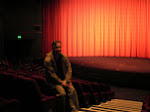
The "Flicks" in Clacton as it is now known - formerly under the name Coronet Century among a few others - is one of a dying breed of old fashioned community cinemas that clings tantalisingly to its original 1930s architecture. Coincidentally, this also perfectly suited the retro atmosphere of Dark City, a 1940s-style film noir world clearly inspired by the paintings of Ed Hopper, and being the first of many pleasant surprises I was to encounter.

Walking into the cinema therefore, was like walking into another world - like ours Jim, but not quite as we know it (Dark World was indeed one of the working titles.)

Few films have such an unusual beginning as this one. Knowing it to be some sort of mixture of film noir and science fiction (two favourite genres of mine), it was another pleasant surprise to see the screen open with an expanse of stars in the night sky - something I've always been a sucker for ever since Star Wars. The camera then pans down from the stars, to the city, to which a sinister voice (Kiefer Sutherland) explains the set-up:

"First, there was darkness. Then came 'the Strangers'..."

Other fans of the film (and indeed the director, the visionary Alex Proyas) have welcomed the removal of this prologue from the Collectors' Edition DVD, but I find it sets the scene nicely and gives audiences a jolt as well as a sense of anticipation of what is to come (without giving away too many of the further twists in the tale), and rarely lets up from then on.

The first person we see is the Prologue himself, Dr. Daniel Paul Schreber, in one of Kiefer Sutherland's creepiest and, I think, most rewarding performances for the cinema - not long before he was about to become a hot property in the TV series 24 . His character here resembles something close to Peter Lorre in the Expressionist German thrillers of the 20s and 30s - of which Dark City is a homage - to Metropolis in particular. Schreber looks at his watch, which ticks round to midnight - at which point unexpectedly, absolutely everything and everyone in the city - apart from "the good doctor" - stops and falls asleep.

Seconds after the entire metropolis has nodded off, the title emerges on screen to a backdrop of encircling spirals (a recurring motif throughout the film), and the camera looms toward a single high rise bathroom window, looking like it could easily be through one of the side doors of the Coronet Cinema.

The occupant of the bathroom is one "John Murdoch" (Rufus Sewell) - a name which he only discovers some time later after desperately fumbling through his possessions - for he, like the main character in a novel by Franz Kafka (whom Sewell resembles physically), is totally bewildered as to who he is and how he got there. More immediate than his identity crisis however, is the sight of a dead girl's body lying in his hotel room, to which three strange bald men in long coats and trilbies, are after him.

So to begin with, Jack the Ripper may well be our potential hero's name - as this is the latest in a series of several killings that he is said to have perpetrated. Before long the police are after Murdoch, and worse than that, the Strangers (played memorably by Rocky Horror Show creator Richard O'Brien and Ian Richardson among others), with their mysterious powers to "alter physical reality by will alone", or "Tuning" as they call it - where buildings morph into taller buildings, different streets, environments, etc. The Strangers can even alter people's memories, but significantly, NOT their personality.

More surprises are to come for Murdoch - and the audience - when he discovers that he can also Tune as well, for whatever reason. Not only that, but at midnight every night - and why is it always night? - everybody goes to sleep, but not Murdoch himself this time.

He also discovers that he has a wife, Emma, played by the lovely Jennifer Connelly - a welcome name in the cast (whom I remembered as the feisty heroine from The Rocketeer and Labyrinth), bringing a touch of humanity (and admittedly decoration) to the proceedings, and sings two snappy songs as well. Emma Murdoch is a trusting and devoted but estranged wife. But is she Mrs Murdoch - or indeed, is her husband a murderer? As Emma significantly mentions later on: "I love you John, you can't fake a thing like that."

The whole existential theme of Dark City together with its haunting 1940s feel is what makes it so involving. The twists are just too numerous for me to spoil for the uninitiated viewer, especially one key moment as Murdoch and Detective Bumstead (William Hurt) begin to unravel the mystery of Shell Beach.

Hurt brings some welcome gravitas and sympathy to his role as the policeman, a much more rounded character than the usual "cop pursing the hero". In some ways I related to his character's description (as outlined by Dr. Schreber) "a very fastidious man, driven by details...rather lonely"; in point of fact, Bumstead was the original central character, until later script drafts shifted the emphasis more towards Murdoch. Not only does Bumstead have an illogical murder case to solve, but also a demented predecessor (Colin Friels) who has gone berserk (a la Renfield in Dracula) because of the case, and is also it turns out, is another "stray" who occasionally stays awake during the Tunings.

Undergound to all this are the Tuning devices themselves, as operated by the Strangers, and recognisably designed by Patrick Tatopolous (he of Independence Day and Stargate and other sci-fi spectaculars), a slick Gothic underworld (peopled by Pinhead lookalikes from Hellraiser) which successfully counteracts David Goyer's vision for the more "realistic" city above.

Sensibly in my view, the noisy climax smashes through from underground to overground, for this is truly where the film's heart lies. The invigorating finale and last scene of the film - on Shell Beach - also has a nostalgic feel to it, and is quite appropriate considering that I was seeing it in a seaside cinema.

Two years after Dark City, came another film about sense of identity in a world created by machines (and even using the same Fox Studios in Sydney): it was called THE MATRIX. Thanks to slick packaging by the Wachowski brothers and the appeal of Keanu Reeves, it made millions. But ultimately it lacked the ideas and the sheer inventiveness of Dark City.

Sometimes a film can exceed your expectations of it. I went in that evening at Clacton not expecting much more than a reasonable film, but came out having experienced a classic.


Roger Ebert's view

* out of fairness I should also mention another interesting film (late) that summer, The Truman Show

Saturday, 9 August 2008

West Side Story (1961)

Recently celebrating its 50th anniversary, in its own words this musical "grows younger" with the passing of time. For my own appreciation of this film, I am indebted on this occasion to a certain amount of maternal influence.

Way back in the 1970's in Aylesbury, my mother kept the film soundtrack of West Side Story as one of her most cherished possessions. I didn't know much about music - or films - in those days, but curiosity one day compelled me to ask what that slightly abstract album cover (above) was all about, with two silhouetted figures dancing for joy down some ladders. It was, I soon discovered, connected to a modern day musical version of Romeo & Juliet, transplanting the setting to the streets of New York with two gangs, the Jets and the Sharks, and the two lovers were naturally members of opposite sides.

It was such a favourite of Mum's that she had actually seen the film in the cinema four times, which knocked my obsession for Star Wars (that I'd seen in the cinema a mere twice) into the shade.

Such devotion to a film inevitably compelled me to find out for myself what all the fuss was about. When video cassette recording became fashionable, one of the first films we recorded from the TV was West Side Story - for Mum's benefit, and so also ultimately, for mine too.

It's a film musical which immediately strikes you as bold and rather different, from the first unexpected image which is of some vertical lines across the screen. This continues for several minutes, while some of the film's melodies are overtured. This must have been bizarre and fascinating for cinema audiences to watch, with the image projected over the curtains as they waited for the film to start. As the curtains eventually parted, the three-word title emerges at the bottom of the screen, and those enigmatic lines suddenly turn out to be the skyline of Manhattan.

From that moment, I was hooked. Any film which discharges the need for any unnecessary names of actors and technicians in its opening credits will always win me over. The idea for the opening sequence, together with the long, lingering camera flying over Manhattan towards the story's backstreet setting, was the idea of the film's chief co-director Robert Wise - in collaboration with the stage show's original director Jerome Robbins. With Robbins involved in most of the choreography and Wise dealing with the dramatic side, United Artists hoped to get the best of both worlds. Inevitably however Robbins' ceaseless overworking of his actors (and the budget) led to him being replaced in mid-production with Wise totally supervising all the remaining sequences.

Robbins' hand is very evident in the opening ballet where the first skirmish between Jets and Sharks takes place. After the atmospheric opening we pan down to see Riff (Russ Tamblyn) and his cohorts gathered, finger-clicking in time to the music, and then suddenly see them prancing around like ballet dancers, which may have worked on stage, but to say the least it looks a little odd on screen, in such tough real-life surroundings.

The pirouettes excepted, the opening (completely unspoken) first 10 minutes are a great introduction to the film, not least because of the electrifying music of Leonard Bernstein, whose masterful score is the lynchpin of the film throughout.

As for the singing...well, in those days most actors were actually dubbed by professionally trained singers, but no-one gave it too much thought until it was revealed that major stars the like of Deborah Kerr and Audrey Hepburn were actually being dubbed by Marni Nixon - or in this case, also Natalie Wood, the film's nominal star.

Her casting was the product of a certain amount of compromise brought about by the studio. The makers' original intent was to use relative unknowns in the main roles, to add to the boldness (although Russ Tamblyn was not without renown having appeared in notable musicals such as Seven Brides for Seven Brothers, and Rita Moreno was also a veteran of supporting character roles), but some sort of star name was needed for the sake of the billing. Miss Wood had just come off the back of a strong role opposite James Dean in Rebel Without a Cause, and her other emerging films of the 1960's meant that she was a bankable enough name without also being too much of a cash-in for the moneymen. I think she gives a refreshingly bright, truthful and hard-working performance which gives the film much of its heart. It's such a shame that her performance was overshadowed by all the gossip about the fact that she was - secretly - dubbed. (It's also a shame that film history has been largely ignorant of Marni Nixon, outside of her very accomplished singing voice.)

For the role of Romeo (aka. Tony) opposite Natalie Wood's Maria/Juliet, the producers chose Richard Beymer, who was up to the standard for good-looking young men back in 1960. He, like Wood, Tamblyn and Moreno, had emerged on the scene in small roles in notable films (such as The Diary of Ann Frank), and also like them, was dubbed - by Jimmy Bryant.

The resulting love duet "Tonight" therefore, is sung with the voices of Marni Nixon and Jimmy Bryant, and Wood and Beymer providing the faces and the lip-sync. Both elements combine to bring out the romantic power of the song. There were plenty of other notable numbers of course, such as "Maria", "Cool" (a nightmare for the actors to perform successfully), the comical "Officer Krupke", the Dance at the Gym (with an amusing cameo by an uncredited John Astin) where the lovers first meet in beautifully stylised fashion, the "Quintet" - a musical tour de force - and the always vibrant "America", which is actually improved in the film version by including the men as the counterpoint to the women, in what was originally a girls-only melody on stage.

Much of the praise and attention (and the awards) for West Side Story were given to the strength of the numbers and the dancing, but all this would be meaningless without a strong dramatic story to hold it together, and so as the tone turns a little darker with the inevitable fight between the two sides which becomes unexpectedly fatal, the story really kicks into gear. For that, we have to thank one William Shakespeare, and although WSS (SPOILER ALERT) takes a slight divergence from its source material by having one of its central lovers survive the tragedy, none of the power is lost, and if anything the closing procession is made that little more powerful by it.

The closing credits are as innovative as the opening, written on street signs and walls (I used the idea of the closing "END" sign for a film of mine, Cornucopia in 2001.) Generally speaking I find musicals a little twee and all too predictable in their happy-ever-after frothiness, so to come across a genuinely serious musical, and a very well made one at that, is an unexpected pleasure to behold.

And this was also, as I said, a favourite of my mother's, who saw most of her four viewings at the old Astoria cinema in Charing Cross Road, where several of the popular widescreen musicals (including the later phenomenal Sound of Music, also directed by Robert Wise) were often screened.

I had the pleasure to watch West Side Story myself at the Prince Charles Cinema in 1992, and though the film has a certain 1960's look to it, the soundtrack is as timeless as it always was. A 50-year old musical still has the youth of a teenager. Happy Birthday.


The Astoria Charing Cross Road in 2008, overlooking the Dominion Tottenham Court Road in the distance.

Saturday, 12 July 2008

Return of the Jedi (1983)

Secretly, this is my favourite of the original trilogy. Though Star Wars(qv) stands up in a class of its own, and The Empire Strikes Back(qv) is considered to be the best entry of the entire saga, for me, Return of the Jedi has that little bit extra ahead of both, because I happened to return - literally - to the saga because of it, after a few years away from such childish whimsy. I wasn't 7 any more but 17, and was able to appreciate it that little bit more from a maturer perspective.

And maturity is what Return of the Jedi certainly has, for me, more than any other entry in the saga.

Back in the 1980s, school came and eventually went. I'd seen The Empire Strikes Back, but had stopped collecting the Marvel Comics, and the toys (which were getting more expensive), etc, etc. Ipswich Town had won the UEFA Cup (and nearly two more trophies in perhaps their greatest season ever), and I'd starting going with my Dad to see matches (both home and away) regularly.

The year was 1982, the summer of the World Cup in Spain. Around about this time mutterings were made about the next Star Wars film. The title of the next episode, according to publicists,would be The Revenge of the Jedi - which gave a pretty fair indication of what to expect. So - the Empire had struck back in the last film, but the Jedi were clearly going to get their revenge.

Enough said?

Ah well, big deal, no real need for me to go and see it then, so I thought. And maybe the saga was just taking itself a little too seriously. Somehow in my heart of hearts I knew it couldn't be as good as the first two - or certainly the first one. Besides, it was all kids' stuff that I'd grown out of.

A year later in 1983, England were playing Scotland in a Home International at Wembley Stadium. Among the advertising boards around the pitch that evening were one or two for "RETURN of the Jedi", which I noted with curiosity. I managed to get hold of a copy of the programme for that match, and saw the poster for the new film, a simple, cool but effective blue on black piece of artwork with just a single pair of hands holding a lightsabre vertically - to this day, I think it's the best and most simply effective of all the Star Wars posters.

My curiosity however, was still not sufficiently aroused to want to go to the pictures, that hot summer (cinema was also something I'd turned a blind eye to.) The Star Wars saga was for me, something pretty much on the back burner....

...BUT, little by little over the succeeding years, I had noticed minor little nuggets of information about ROTJ, mostly out of casual interest: sticker album packs, Return of the Jedi Weekly comics, little TV slots on BBC's Breakfast Time about the chart-topping video release in the summer of 1984.

And then I delved further; I forget from where exactly, but I overheard the whisper that Luke and Leia were actually brother and sister. Mentally speaking I sat up eagerly at this news, as I had always felt the consummation of their relationship was naturally the way the saga should develop, and was disappointed when Leia fell for Han Solo.

This was around about 1987, when my horizons suddenly broadened (as they do for so many teenagers) when going to college, and starting to see the world from a different perspective. After three difficult years at Wilson Marriage, and a further three even more suffocating years at St. Benedict's in Colchester, I escaped from some of the adolescent teasing and drudgery that was secondary education, and then suddenly started to remember about things that I missed when I was younger.

And one of those things of course, was Star Wars.

Interested enough now to want to know more about the plot of ROTJ, I delved further. I went to a second hand bookshop and bought a copy of the illustrated Marvel Comics adaptation of the film, a beautifully woven piece of art, if taking images directly from publicity stills for the most part, as well as dwelling upon the film's sense of melancholy.

Having left school, finally, feeling that I was, at least in theory "my own man" and not a child anymore, and wandering casually around Colchester during the holidays (between school and Sixth Form College), I happened to pass the "Video International" rental store in Magdalen Street, and peered through the window to see a video cover for ROTJ on the shelves. Once again, all the main characters (Luke, Han, Leia) were ever present, and my curiosity was once again aroused, to the point of eagerness.

And then late that summer, after watching a slightly disappointing cricket match between Essex and Surrey at Castle Park (because Essex lost), I took the plunge and asked my father to go to Video International (of which I knew he was a member), and rent out for me Return of the Jedi on video as a consolation for the cricket.

Wow! A chance to see the film 4 years after its first release! You have to remember that video rental was still a novelty: in those days films disappeared after the end of their cinema run - DVDs had not been invented - and the time when ROTJ would be shown on television was far, far away. So to get the chance to see it on video rental that evening was quite a thrill.

A few hours later, waiting for the house to be quiet enough for me to enjoy it properly, I put the tape into the machine. Watching the film in standard "pan and scan" square TV format may lose some of the widescreen spectacle (the opening shot of an Imperial cruiser and a half-built Death Star over Endor is the only moment I was sorry I missed in the cinema), but the setting still looks as captivating as always, and of course the characters were all very familiar - even Jabba the Hutt, whom up till then hadn't actually appeared in the saga.

When he does, it's something of a sight to behold. On reflection I'm baffled as to why Han Solo would be so much in dread of a giant slug who could barely move himself around, but at the time I trusted in George Lucas and whatever conception he had for the character, and that it would be great.

And that also applies to those Ewoks. I have often seen and heard them referred to as "cuddly", but I detected no real sense of this when I first saw the film - and indeed, this "cuddliness" was never really pointed up in ROTJ, but in its subsequent spin-offs: the Ewoks cartoon series and two Ewok Adventure films. They were irritating perhaps, just as the Munchkins were in The Wizard of Oz - but whoever complains about that classic film?

But Star Wars however, had become not just a popular film but a phenomenon, for an entire generation. Some fans therefore who had remained loyal from the beginning, went slightly ballistic at the introduction of these little creatures, when they felt they knew George Lucas's saga better even than George Lucas did; he had originally promised a closing battle between the Empire and an army of primitive wookiees, just like Chewbacca. But Chewie had been quite clearly established by now (Lucas explained) as a fairly sophisticated creature, able to liaise directly with Han Solo as a formidable co-pilot and First Mate - hardly the sort of life form to be considered "primitive". Added to that, wookiees proved to be exceedingly strong, so the Empire would probably be very easily overthrown by an army of these mighty beasts - so no suspense, and no surprise either.

Given these circumstances, it was only natural that Lucas should rework his original idea into something different. Crucially, he took the theme of the underdog - the little man - into its most literal form, as he had done already with Jawas in Star Wars, and created what for me were Jawas without their hoods on.

And the Battle of Endor works, there's no question about that. If there are any sentimental asides, they are usually quickly swept away by the excitement of the scenes taking place elsewhere above and on board the (Second) Death Star. Other parts of ROTJ may have dated, but the closing (three) battles are still a tremendously kinetic piece of fluent cinema.

But I'm getting ahead of myself here; before the grand finale of the saga - and finales didn't come grander than this - there had to be the setting up of the story leading to all that. And it began where it had started in the first place, on the desert planet of Tatooine.

Not quite the Tatooine as we saw it in Star Wars - filmed in Tunisia - but in hot, slightly more golden coloured mid-America, in Yuma, Arizona. Here, C-3PO and R2-D2 are seen walking along the sand dunes towards the palace of Jabba the Hutt. The set-up seems the same as the first film, but slightly different. A brief prologue with Darth Vader apart, the bulk of this opening phase of "Star Wars III" follows the same mould of its original by having its first reels consist almost entirely of creatures and robots, and no people.

Where Star Wars however was a few jawas and one or two robots at the beginning, the opening scenes of Jedi by contrast are a veritable phantasmagoria of creatures and monsters, squashing some of the human element to the side (you can see where some of the genesis for the prequels came from.)

But once the heroes do pop up in the film, they are a welcome sight and worth the wait, especially Luke Skywalker, who is given a great entrance - a character whom, you already sense, has to be the son of Darth Vader, because he's started to look like him (how so exactly is not explained.)

Luke however has more than just his Jedi capabilities to have to call upon when he suddenly has to deal with Jabba the Hutt's mighty intergalactic "hitman", the Rancor, in an excitingly mounted and scored sequence that becomes the first major set-piece of the film. A little moment after the Rancor's untimely demise demonstrates the heart and soul poured into this film: the animal's keeper (Paul Brooke) and his friend weep and console each other on the death of their pet, whilst Luke is herded off to face the wrath of Jabba, together with Chewbacca and....Han Solo, now resurrected from his carbon freeze by Princess Leia (in disguise), who also conveniently gets captured by Jabba, and is now the Hutt's personal slave girl. You can't blame him really.

Foolishly, Jabba and his entire entourage decide to execute the heroes at the Sarlacc pit, little realising that one of the guards is also Lando Calrissian (Billy Dee Williams) in disguise, and that Luke has a few more Jedi tricks up his (or more accurately R2-D2's) sleeve. I loved how Mark Hamill was given the chance to strut his stuff, being the hero in true swashbuckling fashion, and doing what I assumed Jedi knights were supposed to do. Added to that, Han Solo had returned - oh yes, and Leia Organa looked fetching in a metal bikini, which seemed to pleasantly surprise most males, and some females (Carrie Fisher included), but it was no surprise to me - I knew Leia was beautiful since 1978, and didn't need a metal bikini to prove it.

The Tatooine scenes, I confess, slightly bore me nowadays. The story only really warms up when another evil warlord arrives - no, not Darth Vader, but his boss, who is "not as forgiving" as Vader is! That character is the Emperor, formerly known as Senator Palpatine, and played by Ian McDiarmid. "Who's Ian McDiarmid?", most people wondered.

McDiarmid was one of several distinguished British stage actors, not really known outside of that medium (Michael Pennington, Kenneth Colley, Dermot Crowley and Caroline Blakiston were other examples), and did what all good British character actors do: he brought out the character in a splendidly overplayed (but never unsuitably so) performance, full of guttural resonance and Machiavellian teasing. McDiarmid has since become a Lucasfilm favourite, and his acting in the subsequent Star Wars films has stood far above anyone else.

Although much of the credit for Jedi was given to Lucas (who had much more of a "hands on" approach than on The Empire Strikes Back), little credit was given to the film's actual "director for hire", the sadly underrated figure of Richard Marquand. Because so much of the film looks like Star Wars, it was only natural to assume that George Lucas had the major hand in its making, but this I think is only partly true.

A former actor, Marquand came from a background of directing television documentaries and dramas and a couple of minor British feature films - one of which, Eye of the Needle, impressed Lucas. The sheer scale and spectacle of ROTJ however was something he had never dealt with before, but he took the task on with Shakespearean reverence to the material, and to its creator.

He also gladly allowed Lucas to dabble in whatever way he wanted (a similar creative partnership also arose at that time for the film Poltergeist, between Tobe Hooper and Steven Spielberg.) Lucas concentrated on the action and the overall scheme of galactic history, and Marquand dealt with the characters and the emotions - an ideal blend.

It was Marquand who also insisted that Yoda return to make one final, dignified exit from the saga, having been so strongly established as a character in TESB. Having now created a character who could walk and talk with great wisdom and truth, Stuart Freeborn and Frank Oz now had the added challenge of making Yoda look even more frail, and have a convincing death scene to boot - and once again, they came up trumps. Lest we forget, thanks also in no small measure, to the acting skills of Mark Hamill who reacted with suitable pathos.

After Yoda's death (and that was a surprise that the comic book adaptation had not prepared me for), there comes the welcome return, in spectral form once again, of Alec Guinness as Ben Kenobi, who has the unenviable task of explaining to Luke the key plot twist in the saga (that contradict Ben's own words spoken in Star Wars) about his father. The audience would only believe it if Guinness/Kenobi himself explained his reasons for "lying" - and it's an explanation which cleverly skirts around the deception, with Guinness giving a world-weary shrug to it all.

But there's more to this dark secret than just Vader however - whom we learn, was also named "Anakin" Skywalker. "The other" that Yoda spoke of in passing (both here and in The Empire Strikes Back), turns out to be Leia - as it always was really, Luke realises, as did I. The fact that she is a blood relative to Luke is of course, contri
ved, but like in the best (and worst) of Dickens and other great writers, it all has a nice sense of coming together and satisfying storytelling.

The scene where Luke tells Leia the truth (which she also "sensed" from the first moment too), is perhaps my favourite of all the scenes in the later SW films. Mark Hamill and Carrie Fisher were given short notice to learn their lines, but deliver them with beautiful aplomb, thanks to Marquand's sympathetic direction, which relies all on atmosphere and emotion and not action. Brief mention is also made in this discourse about Luke & Leia's mother, which set my curiosity bells a-ringing in the years to come.

At this point, the stage is set for the great showdown, not only physically but spiritually and emotionally, between Rebellion & Empire, father & son, and Good & Evil. Vader now returns to see Luke, and both men are much more subdued since their last meeting. They are now two rather similar sides of the same coin. Further nuggets of information about Vader's early days are mentioned - the name Anakin Skywalker is one that "no longer has any meaning" for him, and when Luke tries to entice his father back to the good side - before the inevitable confrontation happens - Vader briefly mutters a little insight: "Obi-Wan once thought as you do."

The tragedy of Vader, as well as the legend, is now brought to the fore. He turns his own son over to the Emperor, as expected, but stands ruefully over a balcony in the Ewok forest, wondering if, as Luke suggests, Anakin is truly dead.

The interweaving space battle with the (multi-alien) Rebel fleet and the dogged Ewok forest battle are splendidly mounted, but the crux of the film now lies in the scenes with Luke, Vader, and the Emperor. The film's editors (which included the soon-to-be divorced Marcia Lucas) ensure that the battle only really swings the good guys' way once Luke makes the decision not to turn to the Dark Side, unequivocally; and this, when he was provoked by Vader into the prospect of Leia turning to the Dark Side instead - a bit of artistic inspiration by Richard Marquand, and leading to a last desperate lightsabre onslaught, superbly scored by the ever-reliable John Williams.

The embittered Emperor however has more than just malevolence up his sleeve, and shows his true colours in response to Luke's defiance. In perhaps the most moving and unexpected of moments in the saga, it is not Luke but his father who finally defeats evil, by turning on the Emperor - his master - in order to save his son's life, at the cost of his own. Skywalker Senior and Junior then console each other for the first time in their lives, and the dying Anakin asks Luke to take the Vader mask off...

Here was another revelation I had not expected. The comic adaptation has Luke averting his gaze in horror and pity as his father dies away, but on screen we see, briefly, the now old man that was/is Anakin Skywalker - and he's played not by David Prowse, or James Earl Jones, but by another distinguished British stage actor, Sebastian Shaw. This was something of a revelation: a father figure who is actually rather humble, and I suppose, quite like Obi-Wan Kenobi in many ways, and was British. It all had a lovely sense of the saga coming home (to Britain that is.) And indeed, it is Obi-Wan, Yoda, and Anakin who stand reunited together as ghosts of the past at the film's closing celebration.

As Luke sees the Three Wise Men watching over the happy scene, his sister Leia comes over to take Luke by the shoulder, and bring him back, as the novelisation puts it, "into the circle of warmth and love."

A fitting end to a great trilogy.

Yet recently, a certain number of inexplicable changes have been made to the original saga, and the one that suffered the most significant alterations was Jedi (mostly in order to keep it in line with the later prequels), which included such additions as a herd of banthas strolling through the desert, to a new "pop music" style number in Jabba's Palace (making it seem oddly dated as an 80's film, when the changes were made in 1997!), and most incomprehensible of all, the changing of Anakin Skywalker from Sebastian Shaw in ghostly form, to the (much) younger Hayden Christensen!

My admiration for the original version is sufficient to make it unbearable (and unnecessary) for me to watch the latest version.

I got round to seeing the original film in its proper setting at the National Film Theatre in London in the autumn of 1988, during a season of Jim Henson- related fantasy films. I took along my little 9-year old sister, who was terrified of the Rancor monster when unleashed from his cage, but by and large she could take the film without having to hide behind the seat too often. It was a rousing experience, especially (once again) that end title music by John Williams

It's my favourite of the saga because on the one hand of course, it's a great wrap-up to the story, and on the other that it has a sense of melancholy and destiny fulfilled. There were not many things in the 1980s that turned out to be "Happy Ever After", but Return of the Jedi was one of them. It was not a celebration of the 80's, but a belated final party for the 70's, the era which Star Wars helped to define.

Having reawakened myself to the wonders of the Star Wars galaxy, my imagination opened up again, beyond college, toward the future, towards even old forgotten dreams of being in the films myself.

The back story revealed in ROTJ had excited me enough to want to know how things were going to turn out, when - and if - they were going to make any more Star Wars films.

In the early 1990s, I decided to put these plans into concrete form, by writing my own Episodes 1, 2 and 3 of Star Wars.

But that as they say, is another story reserved for another time.....

Tuesday, 1 July 2008

Oh! What a Lovely War (1969)

Joan Littlewood's scathing, nostalgic satire on the First World War (based on songs and sketches first devised in a Charles Chilton radio programme Long, Long Trail a-Winding), used Pierrot clown costume for all the characters, to convey the circus farce of war. It was a move indicative of the anti-war feeling during a time when the Vietnam war was starting to escalate. Subsequent versions of the stage show however (including the above), have been indelibly influenced by the film adaptation by Richard Attenborough, which added the traditional khaki uniforms, and brought the story back into line with a general British nostalgia for the valour of those men who fought in the trenches, whilst still retaining most of the satire.

Attenborough at the time was a complete novice when it came to film directing. As an actor he was one of the foremost, having transcended his initial typecasting as slightly shifty and even psychopathic characters, thanks in part to his own efforts at producing with Bryan Forbes. His considerable expertise in the film business was therefore instrumental in bringing Oh! What a Lovely War to the screen, as well as his actor's kudos for attracting an incredible British all-star cast.

This was perhaps just as well, for Attenborough had pitched the idea for the film to the irascible Charlie Bluhdorn at Paramount, boasting that he could get Laurence Olivier, Ralph Richardson, John Gielgu, Michael Redgrave, Vanessa Redgrave, Kenneth More, etc, etc. Bluhdorn, ever the showman, promised the money for the film so long as Dickie could get just five of those names. He could, and many more too.

At the head of all-star roll call is John Mills (who first instigated the project with Len Deighton), unusually steely and reserved as Field Marshal Haig, but also capable of a jig or two and a reasonable singing voice for the title number. Not far behind him comes Sir Laurence Olivier, briefly seen but memorably pompous as Sir John French - Haig's predecessor. Sir John Gielgud and Sir Ralph Richardson complete the triumvirate of the Acting Knights, and Jack Hawkins has a wordless (cruelly rendered so by throat cancer) but moving cameo as Emperor Franz Josef of Austria, who in effect signs the declaration of war which sets into motion the biggest human disaster of the 20th century.

These guest appearances by the glitterati of British Theatre are perhaps distracting, and diminish a little from the central story of the Smith family going to war, but otherwise Attenborough has a firm grip on contrasting the high luxury and pomposity of the officers, with the degradation and camaraderie of the men in the trenches.

For whatever reason, the entire film was shot, and set, around Brighton, with the old West Pier (nowadays sadly crumbling into the sea since Christmas 2000) as the main focus of the action. Rather akin to Olivier's Henry V(qv), the setting gradually switches to a more grimly realistic setting as the conflict deepens, whilst the officers remain aloof back on Brighton Pier. This juxtaposition is a little odd for me, after a while, when it would be better leaving the pier and focusing totally on the "real" setting.

The satire works at its best during numbers like "They Were Only Playing Leapfrog", sung by several caustic ANZAC soldiers whilst Haig and company hop and skip over each other, as well as the early recruitment songs inside the theatre on Brighton's East Pier with Maggie Smith (and a young Jane Seymour in the chorus) enticing young men onto the stage to go into the Front Line, and especially the incredible closing shot of the film with a whole meadow full (literally) of crosses.

The songs in this musical, it should be noted, are all completely from the period in which it is set, including the title number. This gives it an extra sense of authenticity but also poignancy; we often think nowadays how futile the First World War was, and how different attitudes toward it were in those days, but these very same anti-war sentiments were felt at the time, as the songs testify.

This nostalgia was borne out when I visited my grandmother in London on the weekend of Remembrance Sunday in 1988. At her Dalston flat the TV was showing OWALW which I watched with curiosity, and though I didn't expect Nan to enjoy this sort of satirical film, she was nonetheless moved and engaged by the atmosphere of the time conjured by the songs.

More recently, at the Cambridge Arts Cinema (who nervously but perhaps quite appositely showed the film a month after September 11th) where I first saw OWALW in its proper big screen setting, the projectionist didn't realise that there were no end credits, and the film ran right out to reveal a blank white screen.

I defy anyone not to be moved, or "blown away" as they say, by the closing scene of the film. It is a vivid lasting memory of the First World War, which gets the point across with total clarity.

100 Favourite Films

100 Favourite Films