Saturday, 15 September 2007

The Seventh Seal (1957)

A fitting tribute to the late Ingmar Bergman, whose death was much reported in the media recently, and for whom mortality was his favourite subject. This film of course - probably his most famous - deals with it in spades, but it's also about the virtue and strength of life - in all its quirky and various forms.

It's also about the uncertainties of faith, the keynote being whether or not redemption will be found in the afterlife, if it exists at all. A servant (Gunnar Bjornstrand) who potters around in the film like a wiser version of Baldrick, often represents this more cynical yet amusingly caustic side.

The period of the story is not specifically referred to, but can roughly be assumed to be the 14th century, the time of the Black Death. The characters have a splendidly allegorical feel to them which is never overplayed, making them much more real and believable as a result. Read into them what you will: the main character is Antonius Bloch, played by Max Von Sydow, a knight returning from the Crusades, and on something of an idealogical mission, both before and after his adventures; in some ways this predates Von Sydow's casting as Jesus in The Greatest Story Ever Told, and his later very successful role as The Exorcist.


Bloch also has a certain amount of Hamlet-like stature and gallant uncertainty about him - one of several Shakespeare influences in Bergman's tale. There is also a travelling theatrical troupe heading towards Elsinore (but warned off from going there!), headed mostly by a young couple named "Mia" (Bergman regular Bibi Andersson) and "Jof" (Nils Poppe) - and of course, they have a newly born child (by immaculate conception?) whom they steer through the wilderness whilst others are dying all around - for good measure, Jof also sees a vision of the Virgin Mary helping baby Jesus (we assume) to take his first steps. Other characters are victims of the time; suspected witches, blamed for the spreading of the plague, or temptresses, led by - or indeed leading - equally frustrated men astray.

And then there is Death of course, played memorably by Bengt Ekerot, and his game of chess with Antonius Bloch: a scene much imitated since - directly sent up in Bill and Ted's Bogus Journey, and even popping up in Last Action Hero - but the character, for all its over-familiarity nowadays, is still a very scary and effective image, resonant in so many artistic forms over the centuries, from Dickens' Ghost of Christmas Yet To Come, to the Emperor in Return of the Jedi. In most of these cases, Death is an omnipresent, sinister, yet oddly blank figure, and portrayed here with a brilliantly simple but effective chalk-white face covered with a sinister black cloak. Much of Bergman's film is photographed in this haunting black-or-white style - if ever a film was suited to monochrome, it is The Seventh Seal.


Other quirky scenes seem to belie the notion that Bergman is a "Heavy" director. The subject is certainly a dark one, but that does not mean that his films are without amusing moments. There is one blackly comic moment where a travelling actor, discovered in an affair with a blacksmith's wife, decides to "act" his own death in order to fool the blacksmith, and then hides up in a tree, only to find Death walking right behind him with a saw, in order to chop the tree down!

I first saw the film in its entirety on video in the autumn of 1999, a suitably appropriate time, with lots of foreboding about apocalyptic "Millennium Bug" threats leading up to 2000. Seeing it again just recently at the Norwich Playhouse (the temporary stand-in venue for Cinema City during redevelopment), the film seems just as relevant today, and has lost none of its potency 50 years after it was made.

One of the most famous moments from the film is at the end, when "the seventh seal" (referred to in the Book of Revelation) is opened, and Heaven was silent "for half an hour" - or in this case, the six figures who face Death, as he leads them up the hill (improvised by Bergman with seven volunteers in the distance instead of the original actors) to the dance of death: the knight, his wife, his servant, the blacksmith and his wife, and a strangely mute girl (Gunnel Lindblom) who has just one line in the entire film, but quite a telling one.

Jof sees this vision of the seven of them in the distance, but his wife Mia gently dismisses it as another one of his "visions" (he has also "seen" the game of chess itself) as they walk off into the pleasant morning sunshine, seemingly the only people (together with the baby) who have survived the cataclysm overnight, and reaffirming hope for the human race.

Bergman leaves the audience to make up their own minds about its Christian symbolism. The only certainty in the story - and in life - is death. So beyond that, is there, as Bloch wonders, true salvation in life after death? Or is it all just illusion and fakery?

If the life thereafter and dreams of Heaven and Hell are just illusions of whimsical fantasy, and not scientific reality, then as Orson Welles once said (in the last film he directed F for Fake): "go on singing."

When Ingmar Bergman passed away on July 30th this year, I hope there were angels singing for him up in Heaven, and even if there weren't, there were still plenty down here on Earth to sing for him anyway.

Wednesday, 5 September 2007

Henry V (1944)

"Once more unto the breach dear friends, once more, or close the wall up with our English dead!" Never was the cry more fittingly made in 1944, when Britain and her allies were preparing to open up the long awaited second front against the Germans in World War II. As part of this feverish period of anticipation prior to D-Day, someone in Government circles proposed the idea to Laurence Olivier that he should make a film of Shakespeare's Henry V, in order to promote the cause of the crusading British and Americans into Europe (as well as a tribute to "the few" who fought the Battle of Britain), and also provide some excellent propaganda to bite back at the Germans, who had been making their own escapist adventures with a political message during this time.

Olivier's opportunity was a golden one, and he took it with both hands, and although his resources were often enforcibly restricted because of the war situation, he was able not only to make a richly satisfying colourful adventure, but also one of the most definitive adaptations of Shakespeare on screen.

The opening is beautifully evocative, and owes a minor debt of inspiration to the films of Powell and Pressburger, as a single billing sheet flutters in the blue sky before splashing broadly across the screen to display the title not of the film - in the conventional sense - but of the production as presented in the Globe Theatre in 1600.

There then follows what by today's standards is a horribly obvious model shot, of London in Shakespeare's time - a far cry from what it was to cinemagoing audiences of 1944. Perhaps this was Olivier's point, to present a "staged" version of a London long since gone but much cherished, and a glimpse into the wider world of what we were fighting for once peace finally came. The idea of restoring the Globe Theatre (as dreamed up by Sam Wanamaker in the 1980s) was a very distant thought back in those days, so to actually stage a presentation of the play in its original environment was entertaining and insightful; entertaining in the sense that it allowed for some quite funny Brechtian moments where the actor playing the Bishop of Ely (Robert Helpmann) mixes up the papers with the correct lines for the Archbishop of Canterbury (Felix Aylmer) to read from, and various other moments, such as the rain falling down on the audience standing in the middle of the "wooden O".

Olivier's own entrance onto the stage as King Henry is prefaced by a nervous little cough he gives backstage before entering, another delightfully simple but innovative touch. As the camera eventually pans away from the stagy appearance of the Globe Theatre, Leslie Banks's Chorus takes us into the more "realistic" realms of the outdoors, where the fleet assembles for the invasion, then onto France itself, and the Battle of Agincourt.

As is fairly well known, Olivier did not have the safe resources to film the stirring battle scenes in Britain, so the production switched to Ireland. Here, with the use of only a hundred or so extras on horseback made to look like thousands (an ironic contrast to Richard III which managed to make a thousand extras look like a few hundred!), together with some fine camera tracking work by Robert Krasker and a stirring score by William Walton, he was able to create one of the great battle charges in world cinema, with an especially evocative visual effect of hundreds of English arrows streaming into the air to fall down upon the marauding French forces.

The acting (from quite an impressive cast) is, I have to say, a little "Shakespearean" and grand, as though most of the actors are treating it like theatre instead of a film set. The novice movie director Olivier clearly felt this was more in keeping with the style of the film he wanted to make. His own speeches as the King are suitably "big", with the occasional softer inflection (that he'd learned from William Wyler when playing Heathcliff in Wuthering Heights) in some of the character's soliloquies, as well as in his closing scene with Princess Katherine, played by a young Renee Asherson, who gives one of the film's more subtle and refreshing performances. The other performance of note in the film is that of the great Robert Newton (as Pistol), over the top as usual, but his style of ham acting was often the exception to the rule that transcended both cinema and theatre. I remember particularly him as a terrifying Bill Sykes in David Lean's version of Oliver Twist. Alcoholism cut his career short in 1956, when he should be better remembered than he is.

The rest of the cast is impressive indeed, for its time (those who were available and not on active service): Leslie Banks, Emlyn Williams, Niall MacGinnis, Felix Aylmer, a very young George Cole, and special mention I give for John Laurie, always convincing in whatever role he plays, whether in Shakespeare or Dad's Army.

The film has recently been restored in a gleamingly colourful new print, and is well worth catching both for its visual and musical impact - Olivier rightly gives William Walton major credit at the end. This was also the first in a triumphant series of Shakespeare films that Olivier was to go on and make, of which Hamlet (1948) won an Oscar, with another excellent cast and a fine William Walton score, and then Richard III (1955), which not only allowed Olivier to put one of his greatest characterisations onto film, but also paired him with his two great fellow acting knights, John Gielgud and Ralph Richardson.

The Remake

In 1989 Kenneth Branagh had the audacity to make his own adaptation of Shakespeare's Henry V, and it's worth noting here for some of the similarities as well as the differences to the 1944 original, to demonstrate what Olivier left out.

This version also had a stirring score (by Patrick Doyle) and an all-star cast, with Branagh himself directing and taking the lead role, as Olivier had. But this was a much grittier, more "realistic" film, pointing up the anti-war elements over 40 years after the end of World War II, that suited modern audience tastes better. Certain scenes such as the treachery of three knights, and the execution of Bardolph (Richard Briers), not featured in the original, were included in Branagh's film, demonstrating that Shakespeare can be adapted in all sorts of ways, suiting the differing moods of whatever time the play happens to be performed, be it today in war-torn Iraq, or back in war-torn Europe in 1944.

But Laurence Olivier's version still has that marvellous score, a wonderfully colourful look, and that opening and closing model shot of Old London, as well as all the terrific action.

Tuesday, 7 August 2007

The Mission (1986)

Here is a film that comes under that rare category, the school visit to the cinema.

I say rare because nowadays in the era of DVD it is so much easier to see the latest film within just a matter of months of its release. Even then, back in 1987, such a thing was not uncommon: I can remember seeing Roland Joffe's previous film The Killing Fields on video in a classroom with the rest of the 4th Year in R.E. class. Then on wetter days, when most of the school were confined to the main hall instead of the playground at lunchtime, we would watch on video such (very) variable entertainment as Ghostbusters, Tron, The Toy, or The Goonies.

But to see The Mission at the Odeon Colchester was, as I say, something of a novelty. Significantly for me, it was also my first visit to the cinema to see any kind of film in 6 years or more.

Cinema in those days for me was very much on the back burner. Before The Mission, the only kind of films I had ever seen or taken an interest in were largely "fantasy" oriented: Star Wars, Disney, etc. At home I remember my family also liked to keep up a healthy collection of war films recorded off the telly, using the relatively new medium of video.

At first, when I was told we were going to see "The Mission", I thought I would have to suffer listening to a pop group of some kind, which I had heard fellow pupils (to call them "friends" would be a misnomer) talking about, chiding each other about their favourite pop groups as if they were football teams competing against one another. Adolescent years at school were, as they are for most of us, slightly confusing, painful and revealing years in which one's sense of identity is eventually forged, and shyness got the better of me at St. Benedict's.

To see a "serious" film therefore, set on our own planet in a non-fantasy and largely mature fashion, was something of a breakthrough, as well as a welcome escape from the everyday stresses of school life. Before the film began we trotted our way in, some of the kids threw sweets at the screen before the start of the show, and we sat down to watch some of the trailers and ads - which I remember included one for a Harrison Ford film, The Mosquito Coast. I found a seat out of the way of most other people to the side - a trend I have tended to lean towards ever since.

The main feature film which duly followed that afternoon wasn't perhaps the greatest film to bowl me over, but there were nonetheless certain indelible impressions that stayed with me.


The strongest one I suppose, is the image of those waterfalls, which dominate the screen in the opening titles. Indeed, the sight of a martyred missionary priest being tied to a crucifix and sent over the edge to his death had a powerful enough resonance for it to adorn the film's poster (see above). The first, exquisitely beautiful sight of these waterfalls was like being transported to another world, VERY far removed from the Odeon Screen 3.

The locations were in deepest South America, still under threat from outside forces even at the time of filming, where Father Gabriel (Jeremy Irons) atones for the death of one of his Jesuit colleagues by climbing up the rockface of the falls himself to spread the message of Christianity. He wins the natives over by playing his oboe in the middle of the jungle, in a scene which is a gift for composer Ennio Morricone, who duly obliges with a beautifully lyrical theme combined with harpsichord and orchestra. Indeed, his whole score is a marvellous mixture of all his musical influences, from his own Catholicism to the heart-pounding tension of the Spaghetti Westerns that made him famous. Shamefully, he has never won an Oscar for his music in all his 40 years of composing.

The story perhaps took second place to the visual impact of the film, but that is not to say the plot is uninteresting: being in a Catholic school, the subject - of Jesuit priests struggling against slave traders to bring the beauty of Christianity to the South American jungle - was of course a very relevant one. Added to that was of course a strong environmental message which still applies today, of the rainforests being continually plundered by modern technology and economics.

The main actors in the film I had no real knowledge of, save for a vague awareness that Jeremy Irons was in Brideshead Revisited on ITV. Robert De Niro was, I later discovered, something of a big name in the film world, and therefore took top billing in the film as Rodrigo Mendoza, the slave trader who turns to the cloth as a mark of penance after murdering his brother (Aidan Quinn) in a fit of jealousy over the woman they both love (Cherie Lunghi).

Also in this distinguished international cast was a young up-and-coming Irish actor, Liam Neeson - yet to make a breakthrough in films such as Schindler's List, but full of energy, enthusiasm and commitment to his craft - and fellow Irishman Ray McAnally, whose face is the first we see on the screen as narrator and also presiding judge over the ultimate fate of the Jesuit mission.

That fate, is a tragic, cynical, desperately sad but also extremely powerful finale in which the Guarani jungle territory is given over to the Portuguese and Spanish soldiers to ransack and destroy. But the Jesuit priests, who have built the community and grown to love it and its people, do not want to see it die, and remain to face up to - and in some cases engage in - the fighting to the bitter end, sacrificing their lives. Morricone underscores this gut-wrenching finale with a powerful ending on one single drumbeat as the flames engulf the huts and the church and the floating wreckage on the river.

It is an impressive film indeed, that can silence an audience of noisy 15 year olds on a school trip, and I can remember most of us being completely spellbound by the experience.

Sunday, 8 July 2007

Plan 9 from Outer Space (1959)

From the best, to what is commonly considered to be the worst.

The worst film I ever enjoyed.

THIS film as a favourite, I hear you ask? Well, just to be different, yes, and to show I suppose that love of movies is not necessarily a love of great art, but an identification with - and even a nostalgia for - a certain kind of entertainment no longer possible these days.


Just picture the following scenario: the Earth is rapidly developing its atomic power so that it can destroy millions not only in their own world, but even destroy the entire universe. A race of beings from another planet travels to Earth to prevent the potential catastrophe, by raising those Earthlings already dead as a warning of what will happen to everybody else if the Earth scientists do not stop their research.

Sounds like an interesting, perhaps even mind-boggling idea for a movie perhaps? In this particular case however, the creator was the ever enthusiastic but almost totally talentless Edward D. Wood Jr, whose body of work has to be seen to be believed.

Plan 9 from Outer Space was his nadir, both his favourite film and also his shoddiest, his most profound and also his most laughable. It also demonstrates a director with a passion and enthusiasm for his craft that overcame everything else, including how awful it was.

It is ultimately the enthusiasm and sentiment that shines through Plan 9, and is what makes it so endearing. It took me more than a couple of viewings for me to appreciate this however, as well as the added interest in Ed Wood's career with the Tim Burton film of that name released in 1994. The first viewing was on Channel 4 in the mid-1990s, among a series of strange films entitled "Attack of the Killer B's", which had the most bizarre theme tune, that couldn't possibly (so I thought) be from a film. Yet I soon discovered this was Plan 9's opening theme!

What makes it so nostalgic in many ways is the brief appearance of Bela Lugosi, who died a few days into pre-production. Lugosi's appearance was actually some early test footage for a unfinished film entitled Tomb of the Vampire, beginning with the poignant sight of Lugosi at a funeral mourning the death of his wife. Clearly Bela himself looks frail and close to death, and his pain in this little sequence is all too evident. Next we see him outside his house, still in mourning but coveting the preciousness of life by picking up a little flower from his garden - seconds later he walks off camera, and a hideous sound effect of a man run over by a car constitutes the presumed "death scene" of the character. But being Bela Lugosi of course, he "rises" from the dead and is seen parading regally around his house and a weedy looking field in his iconic Dracula costume.

That represents the sum total of Lugosi's actual "performance" in Plan 9 from Outer Space. The rest of him, as such, is represented by a rather tall and lumbering American non-actor (Ed Wood's chiropractor apparently!), who waddles around rather unconvincingly with the Dracula cape obscuring most of his face (as Lugosi himself did in Abbott and Costello Meet Frankenstein) in an attempt to pad out the genuine Lugosi footage into the fabric of the story. Lugosi himself would probably have been amused at the sheer effrontery of it.

This is one of many hilarious continuity goofs in the film. On other occasions the hero, Jeff Trent (Gregory Walcott) says goodbye to his wife Paula (Mona McKinnon) from their veranda, and walks into a patently obvious indoor studio where his car awaits with velvet curtains attempting to replace the night time affect. These same curtains also pop up in Jeff's airplane cockpit, and even the headquarters of the Supreme Ruler of the Universe (Bunny Breckinridge) in his faraway space station!

There were others besides Lugosi in Ed Wood's band of lovable "rogues". Chief among these was giant wrestler Tor Johnson, who broke - literally - into occasional film roles in the 50s and 60s, usually in wordless parts using his awesome physicality. Here however, he is in a "speaking" role as a police inspector who is quickly dispatched by the aliens, which is just as well, because his lines up till then are delivered in an accent that is even thicker than his muscles! Third in this triumvirate of horrors is Maila Nurmi, a TV celebrity whose exotically Gothic looks as "Vampira" led to her not only being cast (appropriately) as Bela Lugosi's wife, but also directly influenced the look of other vamps to come such as Elvira.

This "army" of the living dead is summoned out of their cardboard graves by the aliens to set upon and terrorize the human race, who are powerless to stop them with their guns loaded with blanks. From this enjoyably ridiculous first half of the film, we get to the more "meaningful" part of the story where our heroes eventually manage to track down the captain of the alien spaceship, who is played by Dudley Manlove (a narrator of ice cream commercials), and has the bulk of the ridiculous plot to describe from this moment on.


To top and tail it all off, comes the flamboyant and ludicrously inaccurate TV psychic Criswell, who was moved enough by the film's subject matter to write his own introduction and postscript, and whose narration is in many ways, the icing on the cake. One of his own lines of narration seems an apt description of the film:

"There comes a time in every man's life, when he just can't believe his eyes!"

Well, see for yourself....

https://www.youtube.com/watch?v=M2EdYGSk1VE

Thursday, 28 June 2007

Gandhi (1982)

“When I despair, I remember that all through history, the way of truth and love has always won. There have been tyrants and murderers and for a time they can seem invincible but in the end they always fall. Think of it, always.”

Back in 1989, when I seriously started to rate films on a 1-10 scale, rather than thinking of them as just mere entertainments, this one came top of the list of those I had seen - and we're including the likes of Citizen Kane, The Godfather and the Star Wars trilogy among the competition here.

I mention this in passing because the achievement may well have been influenced by topical events: 1989 was a pivotal year in world history. A dramatic revolution took place with the falling of the Berlin Wall and the demise of several Eastern Bloc dictatorships. Only the tanks of Tianenmen Square prevented the Chinese government from being added to the list of conquests. Within a year Nelson Mandela was also freed from captivity and South Africa became a more democratic nation.

So the atmosphere in those days was very much towards upheaval and the eventual rise of a more peaceful and humanitarian society. But regardless of which year I happened to see it, Richard Attenborough's Gandhi is, first and foremost, a grand and gracious biopic with an extraordinarily vivid central performance by Ben Kingsley. But it is also a triumphant message for our time, be it the 1940s, the 1980s, or today.

First impressions of the film itself came in the shape of all the awards it won (beating Spielberg's wonderful fantasy E.T.), together with Attenborough's endless speeches about his film and the state of the British film industry. Having subsequently seen the film, and the effort that went into it, I think he'd bloody well earned the right to.

It took him over 20 years to realise his ambition of bringing the story of the Mahatma to the screen. The biggest problem, aside from trying to convince Hollywood backers to finance his epic ("Who the hell is interested in a little brown man with a beanpole?" was one unkind executive's reaction), was to find the actor to play the central role. In the early days of the project the film was being planned for David Lean to direct, with Alec Guinness the only possible choice to play Gandhi, once Lean had first finished a little film he was making in Ireland. This "little" film turned out to be Ryan's Daughter, an extremely long romantic drama which took even longer to make, at the end of which Lean was dissuaded from the Gandhi project (although both he and Guinness did make A Passage to India together in 1984, to a mixed reception.)

Anthony Hopkins, a favourite of Attenborough's, next became a candidate to play the role. By this time Attenborough had acquired considerable kudos as a director in his own right, with two boldly cinematic anti-war films, Oh! What a Lovely War and A Bridge Too Far, and also a biograpahical drama, Young Winston, with an uncanny impersonation of the young Churchill by Simon Ward. Anthony Hopkins also gave a good account of himself as David Lloyd-George, but ultimately was considered too Welsh and skinny to play Gandhi, and so Attenborough's thoughts turned round to the possibility of an Indian actor playing his Indian hero.

At this point in the mid 1970s, Richard's son Michael Attenborough was working at the National Theatre, and suggested to his father a half-Indian actor on the books named Ben Kingsley. It may not have been Manna from Heaven, but it was certainly providential casting, and at last it seemed now that the right man for the role was in place.

With the assistance of India's Prime Minister Indira Gandhi (daughter of Pandit Nehru), and Earl Mountbatten - both of whom were later assassinated in similarly tragic circumstances to Gandhi himself - the filming could begin.

Like Lawrence of Arabia, the film begins with the end of the central character's life, when world attention was most focused on Gandhi's assassination by a Hindu extremist in 1948 - the scene itself was "shot" hauntingly in the same garden where the Mahatma was. From this striking beginning comes the largest funeral scene ever filmed - over 300,000 extras were allegedly used for the procession in New Delhi (a tribute to costume designer John Mollo who had to devise period clothes for most of them!) If you look VERY carefully, you will see Richard Attenborough himself as one of the army officers standing behind the coffin; such was the sheer scale of the scene that he had to play one of the mourners in front of camera in order to be able keep an eye on everything else.

At the end of this extraordinarily epic sight, the words of Albert Einstein are quoted: "Generations to come will scarce believe that such a one as this ever in flesh and blood walked upon this earth." It sums up the astonishing aspect of the whole film really, that one man of peace could be able to uproot an entire British Empire from its greatest Dominion.

The film jumps back over 50 years earlier to "South Africa 1893", when we see what looks almost like a different actor to the old man we've just seen shot (the film's make-up is a masterpiece), sitting in a First Class compartment, where Gandhi, a young, affluent, English-trained lawyer, was thrown off the train, in a country that later adopted Apartheid as law.

The incident was a watershed in Gandhi's life, and started him on the trail of fighting social injustice - by non-violent means. A key speech is made in the early South African scenes when Gandhi defends his reasons for using non-violence as his weapon:

"I am asking you to fight. To fight against their anger, not to provoke it. We will not strike a blow, but we will receive them, and through our pain we will make them see their injustice, and it will hurt, as all fighting hurts! But we cannot lose, we cannot."

His first ally in this dauntless quest is his client Mr. Khan, played with quiet dignity by Om Puri. A number of fine Indian actors also contribute good character performances, including Roshan Seth as Nehru, Saeed Jaffrey as Sardar Patel, Harsh Nayyar as Nathuram Godse - the assassin, and most outstandingly of all, a BAFTA-winning Rohini Hattangady as Mrs. Gandhi.

Ian Charleson (on the back of his acclaimed role in Chariots of Fire) is also excellent as a rare British ally of Gandhi's, Reverend Charlie Andrews, in quite a moving scene where he and Gandhi eventually go their separate ways because India has to believe that "what we are doing can be done by Indians alone...". The rest of the international cast is as exemplary as could be expected from any Richard Attenborough epic: John Mills, John Gielgud, Martin Sheen, Candice Bergen (as photographer Margaret Bourke-White, whom she uncannily resembles), and some notable early cinema roles for Nigel Hawthorne and Daniel Day-Lewis. Favourite among the supporting roles for me are Trevor Howard in an unusually understated performance as Judge Broomfield - a staunch Gandhi sympathiser who ironically had to sentence him to 6 years imprisonment - and Edward Fox as the coldly ruthless General Dyer, who ordered the massacre of thousands of Sikhs at the massacre of Amritsar.

The massacre, together with the funeral scene and all the other great set-pieces including the Salt March and the later riots in Calcutta, were staged brilliantly by the veteran Second Unit Director David Tomblin, an old ally of Attenborough's, who has also staged many of the set pieces for the likes of Spielberg and Lucas in their best films.

John Briley's excellent script also captures the domestic life and jovial humour of the man himself, an important element. This is not just the story of a hero, but of a real person.

In many ways this is a portrayal that shines more than the image of the real "Bapu". Reverential perhaps, but as the film itself admits at the beginning, the story of one man's entire life can never be encompassed in one telling (even when 3 hours long), all that can be done is to try and be faithful in spirit to the record and try and find one's way to the heart of the man. This is certainly achieves successfully.

There are those, even today, who feel that the British should never have left India - the most notable and vocal opponent was Winston Churchill - and given the sub-continent's subsequent bumpy history, this is understandable. Perhaps it helped that the Dominion was looking a little shaky for some time anyway, and if anything, it was the intervention of World War II that tipped the balance over towards Britain giving India independence. As one British Governor says mockingly, "we're too damned liberal" - an amusing jibe considering how many of Attenborough's critics consider him a militant liberal himself.

When the question of using such "pacifist" methods against a dictator like Hitler is raised, Gandhi's answer is simple if cunningly evasive: "not without defeats, and great pain, but are there no defeats in this war, no pain?"

Attenborough does not however shirk from making Gandhi just a one-dimensional story of one man's struggle against British oppression, but against racial intolerance as well. The later scenes involving the controversial partitioning of India into two separate nations (India and Pakistan), and the bloody aftermath between Hindus and Muslims, are harrowing and heart-rendering, even if the film sags just a little bit when Gandhi goes into another one of his notable "fasts unto death".

The resulting truce that is declared across the whole of Calcutta, so that Gandhi can live again in a world than can still be united and free and just, is a truly inspirational moment, at the end of a truly inspirational film.


The author at the Mahatma Gandhi Memorial in Tavistock Square, London


Friday, 8 June 2007

Saving Private Ryan (1998)

A slightly topical one this, for D-Day.

Most people who will have seen this film will rave about the visceral opening reel on Omaha Beach, and rightly so. That is not to say that the rest of the film isn't pretty startling too.


Significantly, the veterans of Omaha themselves have said how much they appreciate those opening 20 minutes of Spielberg's film, that bring home to cinema audiences the sheer uncompromising intensity of the horrors of battle, more so apparently than any other war film. The ironies and tragedies are so endemic: at one point a soldier gets a bullet which pierces a hole in his helmet, but not his head; as he marvels at his good fortune, in that next split second he gets shot. Another soldier is seen holding his own left arm in his hand - a common trait of Spielberg films: severed limbs often pop up (or out, as the case may be) in the likes of Jaws, Jurassic Park and the Indiana Jones films.


It is perhaps, I confess, not my favourite war film. In truth, I wonder if the genre is always trying to have its cake and eat it, by depicting a male-dominated macho environment with lots of action, whilst at the same time trying to have a strong anti-war message.

There are also certain other war films that may invoke happier memories for me, such as The Cruel Sea for its very English way of coping with conflict at sea and for Jack Hawkins, or All Quiet on the Western Front for its brilliant depiction of disaffected trench life and its superb tragic ending. Even Spielberg's own Schindler's List (a war film of a kind) is I feel an artistically superior work, as also were Lawrence of Arabia and Casablanca - war films in the loosest sense.

But with Saving Private Ryan, over all the above mentioned, there is still the experience of those opening 20 minutes. Perhaps they are akin to experiencing something like that in real life: once gone through, it is impossible to get out of the system.

It should also be said though, that Saving Private Ryan is still a film, not the actual war itself, as Spielberg well knows, but the truthfulness in the way he depicts the action (supported by Janusz Kaminski's innovative camerawork) without over-glorifying it, is a model of fine film-making.


It is the most technically accomplished and visceral of all the war films he has made since his teenage years; back then the introverted, awkward young Steve hired some of his fellow teenage friends, dressed them in tin hats and army costume, and spent weekends shooting his shoot 'em ups as a hobby. Now the costumes and the pyrotechnics are much more elaborate, the budgets are much bigger, and his friends on the block now include Tom Hanks.


Its Americanness is perhaps a disincentive. From the very first shot - of the stars and stripes, which is repeated at the end - it never ceases to remind you that this is "America's war". One scene in the film where a fellow American commander (fleetingly played by Ted Danson) refers to Field Marshal Montgomery is about as far as the non-American contribution to the Allied cause is mentioned. Even the planes that fly in the sky are American.

The film's influence may also have a lot to answer for: the awful Pearl Harbor relied for much of its action on a lot of incoherent noise and shaky and unrealistic camera movements. Clint Eastwood's two recent fine films about the battle of Iwo Jima (both produced by Spielberg) nonetheless had jarring CGI action scenes that were, again, totally incoherent, and shot in horribly poor colour, even though the action takes place in the sunny Pacific! Most war films (and also the spin-off TV series Band of Brothers) seem now to take the lead of Saving Private Ryan in filming gritty, hand-held cameras and unintelligible battle scenes.

I suppose the argument could be made is that this is how it feels to be in the middle of a war; perhaps, but I feel that SPR's action is something of a one-trick pony. Once done the first time, the novelty quickly fades. Think of Hitchcock, whose shower scene in Psycho was truly shocking and innovative - but was there really need for any more violent stabbing scenes in films from then on? Of course not. (There were however, many largely inferior imitations of Psycho.)


This does not alter the fact however that Spielberg was ground-breaking in the use of such a revelatory technique. Two films that he also owes a debt of homage to are The Longest Day and A Bridge Too Far: the former a meticulous recreation of D-Day from with an Omaha beach assault that worked within the confines of 1962 taste and restraint; and the latter for its full-blooded depiction of Operation Market Garden. Both were benchmarks to Steven of the example he had to follow, and exceed.

My own memories are of seeing the film at the Odeon Colchester in the autumn of 1998, and as with most Spielberg films, he gave his audience something to remember. There was some thoughtful closing theme music at the end, as always, by John Williams.
The film's eventual release seemed a long time in coming, as it was in production for the best part of two years - I remember seeing Spielberg and Tom Hanks on TV at the funeral of Princess Diana in the autumn of 1997, when filming had reached Hertfordshire, which served as a makeshift bombed French town for the later climax of the film. The then Prime Minister John Major had refused the film crew access to the British Army as extras, and most of the beach scenes were subsequently shot in Ireland.
At the time, during all the build-up to its release, SPR was perceived to be "just another war film". But in the hands of the more mature Spielberg that made Schindler's List, it is definitely much more than just that. Saving Private Ryan is perhaps not the masterpiece that some people have made out, but certainly a defining moment in the war film genre.

Sunday, 27 May 2007

Star Wars (1977)


30 Years On


Picture the scene if you will: a wide-eyed innocent 7-year old, with no knowledge at all of films, and only a vague awareness at the time of 1970s popular culture, hears along the grapevine of an exciting new "thing" that is encapsulating the imagination of children everywhere (in much the same way as the Harry Potter books did 20 years later). Intrigued to the point of wonderment, this boy visits the local newsagents in Prebendal Farm, Aylesbury, and sees on the shelf a "STAR WARS Weekly" comic, emblazoned with the typically bold Marvel Comics image of an idealistic hero fighting two opponents, watched over by two odd looking semi-human robot figures.
Picking the item up off the magazine rack, I persuaded my parents to buy the comic for me, and I read on, gripped by the "story so far" of Princess Leia Organa, Han Solo and Chewbacca the wookiee, captured by space pirate Crimson Jack whilst on their way to the Drexel system to find Luke Skywalker, who has crash landed there whilst in search of a new Rebel base, and finds himself at the mercy of the Dragon Lords and Governor Quarg.


So began my first interest in the phenomenon that was (and still is) Star Wars. The comic I read was printed in July 1978, over a year after the film first exploded onto American screens in May of 1977. Reading through that first comic - issue No. 23 - I check back and discover that the whole story did not begin with Dragon Lords and space pirates, but with an unfortunate rebel cruiser attacked mercilessly by the Galactic Empire, and the precious princess on board captured by the menacing figure of Lord Darth Vader, but not before her two robots have escaped onto a desert planet, where our young hero retrieves them.

Investigating further, I talk with my father and discover that this whole legend is not actually a comic book, but a film. Naturally aware of my curiosity, Daddy - as I called him them - looks into the matter and discovers that Star Wars the Movie is being shown at the Dominion Tottenham Court Road in London. Excited at the prospect of visiting the city and seeing my first major film, I accept his suggestion for us to go there.

The Dominion Theatre is a magnificently retained example of splendid cinema architecture. It is only used for theatre shows nowadays but still retains its magnificence, and back in 1978 it had been installed with a new, exciting sounding system named "Dolby Stereo".

And so it begins. The lights in the huge theatre darken, and then the screen bursts open to the sound of Alfred Newman's magnificent Twentieth Century Fox fanfare, followed by a moment's silence, and a strange but oddly haunting message on the screen:


A long time ago, in a galaxy far, far away...


Seconds later the screen explodes again, the title retreating into infinity amidst a background of thousands of stars in space. George Lucas used the somewhat unconventional method of ditching opening credits in favour of "story so far" sloping credits (borrowed from the Flash Gordon serials), perfectly setting the scene for a new modern myth. Seconds later that same rebel cruiser that I had read about in the comics, races through space, and is completely engulfed by an Imperial spaceship that is almost larger than the cinema screen itself.


The memories go on, many of them hazy now nearly 30 years later, but once first introduced to movies - especially this one - it is never forgotten. The only definite memory I have of the film itself that day is how much I enjoyed the sequence where Luke swings to safety with Princess Leia. One tangible - or rather intangible - memory of the day is of leaving my coat behind whilst coming out of the cinema. 30 years later, I still whimsically wonder if the Dominion Theatre has my little dark blue jacket in their Lost Property Department.


Childhood memories of a film tend to be rose-tinted and overly nostalgic, particularly of the actors participating in it, but I still think that my first opinions ring true even today. Mark Hamill was a fine Luke Skywalker whom I strongly identified with, Harrison Ford was popular and fun as Han Solo, and Carrie Fisher I thought was a major star actress with a pretty, pert and brilliant talent. There was also an actor playing Ben Kenobi, little known to me in those days of course, but I soon discovered he was a distinguished actor of many years experience, and British at that: Sir Alec Guinness.


Looking back now, I suspect it was Guinness's down-to-earth Britishness that brought home to me the appeal of this saga. In those days there wasn't quite so much of the distinction between the all-American hero and the "English" villain (NB: most of the cast of Star Wars were British actors who were dubbed into American), and so the loss of Obi-Wan two-thirds into the film - killed by his former apprentice Darth Vader - was a loss indeed.


Perhaps this is also why I enjoy "Episode 4" over Episodes 5 and 6, because Alec is such an intrinsic part of the film. I truly believe that the reason it has become such a landmark film above so many other "blockbusters" (a term coined in 1977 apparently) was because of the presence of Alec Guinness. He gave it that extra edge. It's perhaps also true to say that Star Wars, and Alec Guinness, gave me the impetus to act (or certainly to be creative) which I have today.


Most of the other lingering memories of the film on reflection come after the second viewing - such was I swept along by the experience first time round - at the local Odeon in Aylesbury. This was still in the days of the "roadshow" movie distribution, where a film had an extended run in the big cities prior to wider release, not at all like the global mass distribution of today.

Both my parents came along for this one, and at the end my mother was having trouble finding our house keys under the seats in Screen 2. In my impatience to get out of the cinema, by chance I watched some of the closing credits, and heard for the first time the lyrical closing themes of John Williams's iconic score. To this day, I watch films to their complete conclusion, often just for the pleasure of listening to the end title music.

Since then I've probably seen the film - in rough figures - about four or five times in the cinema, one of the most recent occasions being in 1997 at the Odeon Leicester Square, for the much hyped "Special Edition" - which tinkered about with bits of the film but made no difference at all from the exhilaration of the original. History nearly repeated itself as I left behind my (Star Wars) baseball cap under the seat, and just remembered at the last second to retrieve it.


I'm sure there are thousands - nay millions - of other stories from each individual who remembers the first time they saw this film. Such is the effect it had on that generation, and subsequent generations too.

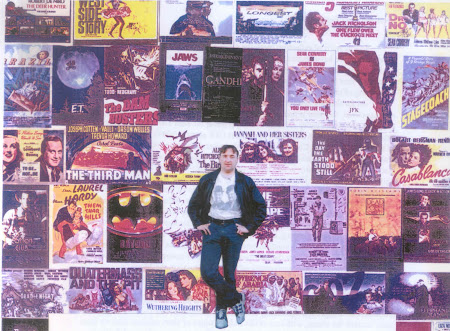
Last but not least reflection however, goes to its creator, the brilliantly talented and surprisingly sanguine figure of George Lucas, a much maligned filmmaker in the years since, who unofficially "retired" from directing after Star Wars. His return to the director's chair with The Phantom Menace, Attack of the Clones and Revenge of the Sith, inevitably paled in comparison with his 1977 original.

In spite of all the supposed problems he had making it, his collaboration with the actors, John Williams, his film-making friends, a bemused British crew, and a new veritable rebel alliance of Special Effects technicians (soon to be team-named "ILM"), created a piece of cinema magic that rivals The Adventures of Robin Hood and Casablanca for freshness and consistently entertaining its audience after repeated viewings.

Oh, and how do I know the exact day I saw it?


There was a newspaper stall outside the Dominion Theatre - selling a Star Wars Weekly dated 19th October 1978, and I saw the film the following Saturday, the 21st - Carrie Fisher's birthday.

Back at the Dominion Theatre in 2003

100 Favourite Films

100 Favourite Films